Marbled Meat: How to Recognize Quality
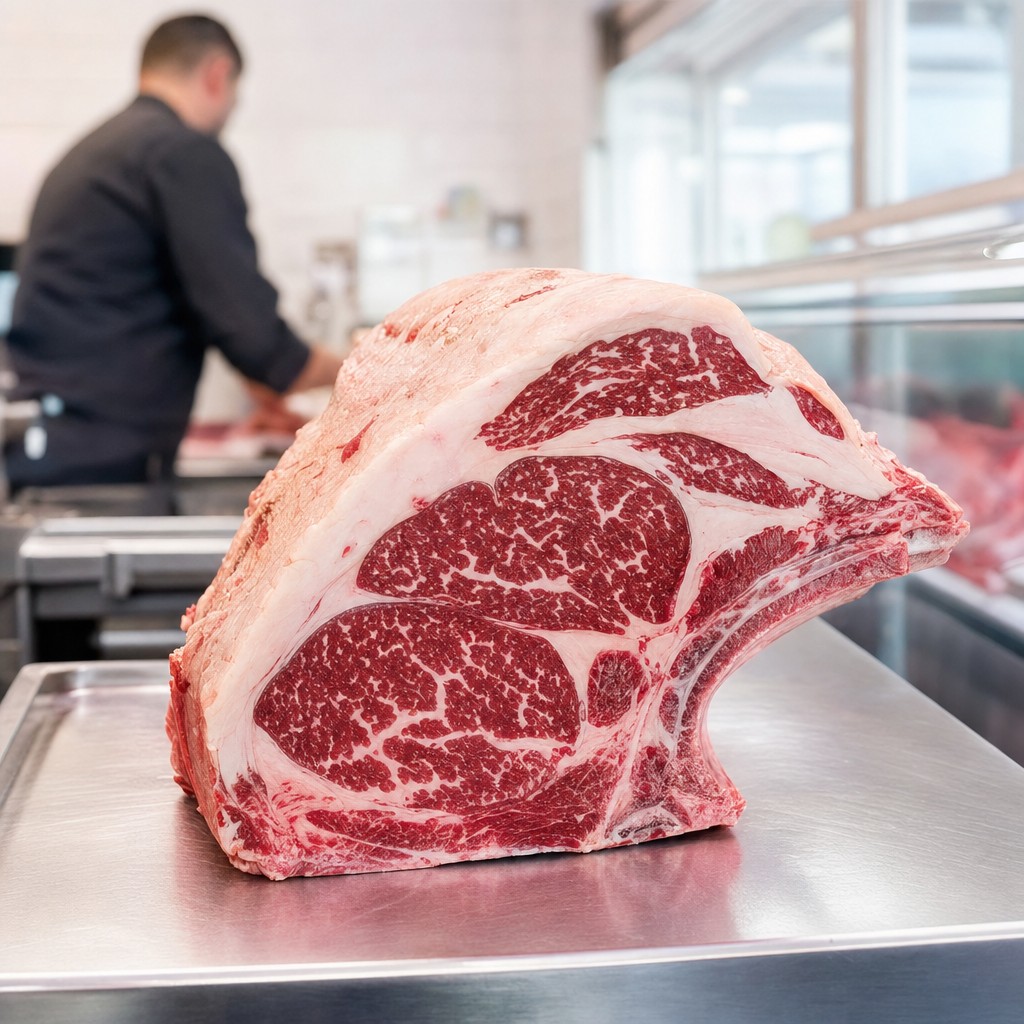
Marbling refers to the fine veins of fat distributed throughout the flesh of meat. The more visible and evenly distributed the marbling, the more flavourful and tender the meat will be when cooked, as the fat melts and bastes the flesh from within. It's a reliable criterion for assessing the quality and gastronomic potential of a beef or veal cut.
What exactly is marbling?
Marbling is that fine white lacework you observe on the surface and inside meat. It is intramuscular fat, naturally present within the muscle fibres. Unlike surface fat, which borders the meat cut, marbling is intimately interwoven with the muscle.
This intramuscular fat plays a crucial role:
• It melts during cooking and infuses the meat with moisture and flavour • It prevents the meat from becoming dry or tough • It creates a tender texture and rich, deep flavour • The more abundant it is, the more tender the meat will be
The term "marbling" comes precisely from this resemblance to chopped parsley: a multitude of small white flecks scattered throughout the pink flesh.
How to recognize good marbling
Well-marbled meat presents several distinctive characteristics:
Regular distribution
Observe the cut surface: the marbling should be evenly spread throughout the entire cut, not concentrated in one spot. Homogeneous marbling guarantees more even cooking and consistent tenderness from start to finish.
Fineness and delicacy
The fat veins must be fine and delicate, never thick or massive. Coarse marbling often indicates less expensive and less refined meat. The finest cuts feature subtle and numerous streaks, not coarse fat patches.
Colour and appearance
Marbling should be pure white or slightly cream-coloured, never yellowed or brownish. A questionable hue may reveal oxidation or improper storage. The flesh itself should be pink or cherry-red, vibrant, never dull or greyish.
Fat firmness
At Boucherie Léopold I in Jette, our butchers ensure that intramuscular fat is firm and well-attached to the flesh. Fat that detaches easily or appears soft is less desirable.
Marbling according to meat type
Belgian Blue Beef
Our selection of Belgian Blue beef naturally offers excellent marbling. This breed is distinguished by its ability to develop generous and fine marbling. Cuts such as ribeye or black patch display remarkable marbling. This is what makes them so flavourful when cooked: the fat melts slowly and gives the meat its rich taste and tender texture.
Culard Veal
The Culard veal we offer also features beautiful marbling, though more subtle than that of beef. Its ribs and escalopes benefit from marbling that, while finer, contributes to the tenderness and delicate flavour characteristic of quality veal.
The importance of marbling in cooking
Marbling doesn't just change the appearance of meat: it completely transforms the cooking process and the final result on the plate.
During cooking, intramuscular fat gradually melts. This process, called fat rendering, creates several positive effects:
• The meat remains juicy as fat brings moisture to the fibres • Natural flavours intensify as fat spreads throughout the flesh • The texture becomes tender and melt-in-the-mouth, never dry • Whether rare or medium, well-marbled meat remains tender regardless of cooking time variations
Meat without marbling, by contrast, tends to lose moisture under heat and become rubbery, especially if cooking slightly exceeds the desired doneness.
How to choose a well-marbled cut
When you shop at your butcher, ask these simple questions:
• How do I recognize marbling on this cut? • Does this cut have good natural marbling? • What's the best cooking method for this meat?
Our butchers in Jette are here to show you the marbling and explain why a cut is worth its price. Visible marbling is a mark of quality and a reliable indicator.
If you order in advance, mention that you appreciate generously marbled meat. You can also call us at 02 307 04 38 for advice on a specific cut.
Tips to optimize your purchase
Buy according to your cooking method
A cut to grill quickly (ribeye, fillet) must absolutely have beautiful marbling to stay tender. Meat for stewing (lamb ragout, boiled beef) can have less marbling, as slow cooking will tenderize the meat regardless.
Observe the cut in good light
Marbling is easier to see in natural light. Don't hesitate to turn the cut to spot marbling from all angles.
Trust your eyes and your butcher
After a few purchases, you'll develop an eye for marbling. And if in doubt, your butcher can explain the quality and origin differences between two cuts.
Frequently asked questions
The more abundant the marbling, the more expensive the meat?
Yes, generally. Generous and fine marbling indicates higher quality meat, often from a recognised breed (such as Belgian Blue) and controlled farming. It's also a sales criterion: highly marbled meat sells better than lean meat.
Does visible marbling mean the meat has a lot of fat?
No. Marbling is fine intramuscular fat distributed throughout, not a layer of surface fat. Marbled meat remains relatively lean, as the fat is interwoven with the flesh, not concentrated at the edges. It's very different from meat covered with a thick layer of white fat that you can easily trim away.
Can I choose meat without marbling to eat leaner?
Yes, it's possible, but you'll sacrifice tenderness and flavour. Lean meat without marbling will dry out more easily when cooked. If you want lean meat, opt instead for moist cooking methods (stewing, ragout) or cuts designed for this, rather than giving up marbling which guarantees you better cooking results.
Would you like to see the quality of marbling for yourself? Visit Boucherie Léopold I in Jette and our butchers will show you the finest marbling patterns. You can also call us at 02 307 04 38 to find out about our arrivals and reserve the cut that suits you.