Barbecue and plancha: grilling without drying out
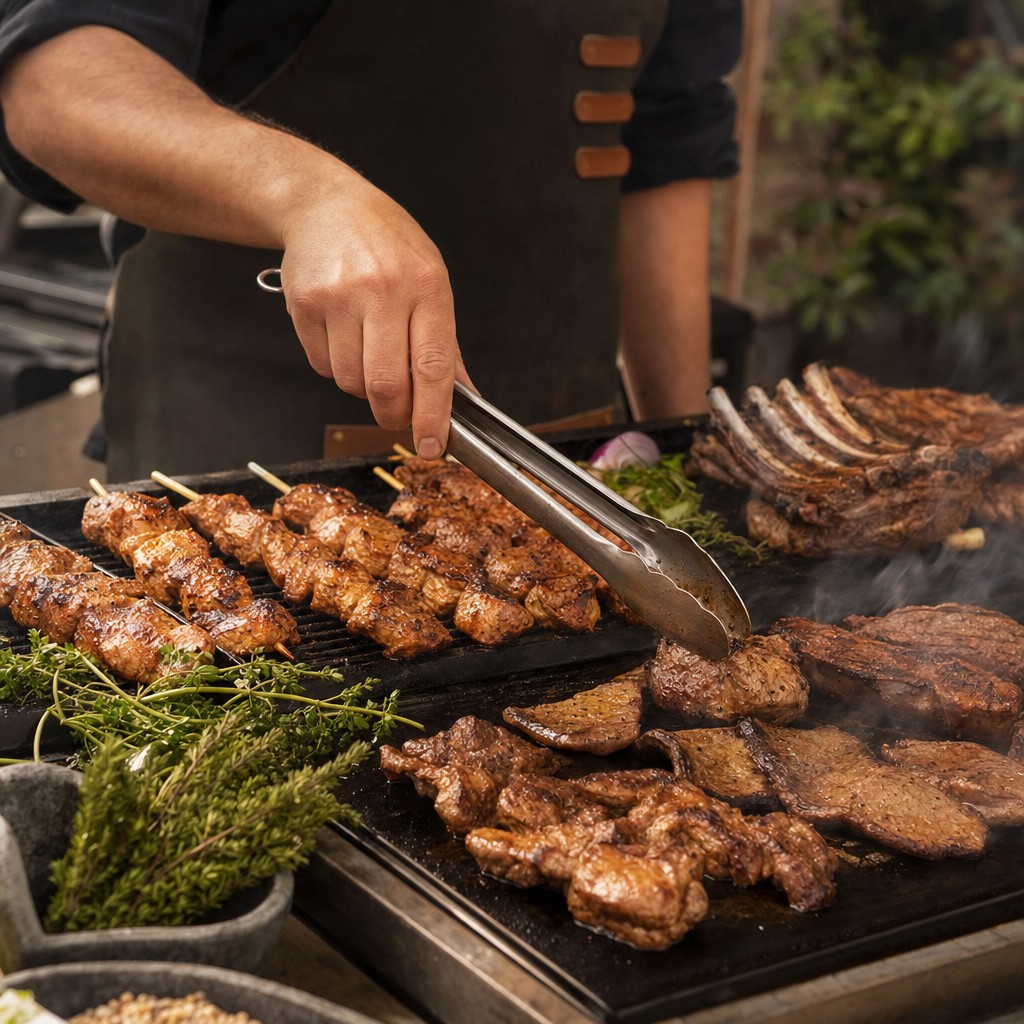
Grilling without drying out rests on three principles: mastering temperature, respecting the cooking time suited to each cut, and choosing your pieces well. Meat that is overcooked loses its juices and becomes fibrous; well-grilled meat stays tender, juicy and develops a savory crust. Boucherie Léopold I in Jette guides you to succeed with each cooking.
Understanding temperature: two cooking zones
The secret of good grilling lies in two distinct zones: a hot zone to sear and a warm zone to finish cooking without burning.
- Hot zone (200 to 250 °C): it serves to form the crust in just a few minutes. This is where you start cooking on the barbecue or plancha.
- Warm zone (120 to 150 °C): this is where the meat finishes cooking slowly, preserving its inner juices.
On a gas barbecue, close half the burners. On a charcoal barbecue, push the coals to one side. On a plancha, simply adjust the temperature or use zones of different power.
Chicken pieces: quick cooking and monitoring
Farm chicken comes in several cuts, each with its own ideal duration.
Chicken breast: the leanest and fastest-cooking meat. At 1.5 centimeters thick, 5 to 7 minutes are enough (2 to 3 minutes per side over high heat, then 1 to 2 minutes over low heat). Caution: beyond 65 °C at the core, it becomes dry. Pierce with a fork; if the juice runs clear, it is ready.
Thighs and drumsticks: fattier and richer in collagen, they tolerate cooking better. 15 to 20 minutes total: 5 to 7 minutes each side over medium heat, then 5 minutes skin-side up to finish. Check that the juice runs clear when piercing the thickest part.
Wings: thin and quick, 12 to 15 minutes with good coloring. Marinate them 30 minutes before for more flavor.
Whole chicken: allow 45 to 60 minutes depending on weight (1.5 to 2 kilograms). Start at medium temperature, skin-side down, then turn halfway through. Check doneness at the thigh-breast junction (72 °C minimum).
Marinated skewers: the advantage of infusion time
Homemade marinated skewers (beef, chicken, turkey) already benefit from a preparation that tenderizes and flavors the meat. This marinade also prevents drying out.
Cooking time: 10 to 15 minutes depending on cube size and thickness. Turn them every 2 to 3 minutes for even cooking.
Key tip: place the skewers on the grill 2 to 3 minutes after lightly oiling it. The wood of the skewer should never touch the coals: it would char and risk burning. Position the skewers perpendicular to the grill so they rest in balance.
Thick cuts: steak and ribs
Entrecôte: 3 centimeters thick, 3 to 4 minutes per side over very high heat to sear, then 2 to 3 minutes over low heat. Goal: 55 to 58 °C at the core for a pink center.
Lamb chop: thin and delicate, 2 to 3 minutes per side is enough. Lamb is best served pink.
Lamb shoulder: thicker, 4 to 5 minutes per side, then rest 2 minutes in the warm zone. Like leg of lamb, it tolerates a slightly pink cooking well.
Beef liver or veal liver: thin slice, 1 to 2 minutes per side maximum. Liver cooked too long loses its legendary tenderness.
Preparation and waiting time before serving
Remove from cold in time: take the meat out of the refrigerator 20 to 30 minutes before grilling. Cold meat continues to cook at the center even after the outside is browned.
Rest after cooking: this is the professional secret. Let rest 3 to 5 minutes on a warm board, covered. The juices, which contracted at the surface during cooking, redistribute through the flesh. When carved, the meat bleeds less and stays tender.
Temperature at the core: invest in a meat thermometer (one-time cost, 20 to 30 euros). At the core, aim for 60 to 65 °C for chicken, 55 to 58 °C for beef and lamb, 60 to 63 °C for veal. This seems low, but the meat rises another 2 to 3 degrees during rest.
Avoid common mistakes
Turning too often: once is enough for steaks, twice for larger pieces or skewers. Each turn releases the juices you want to keep.
Pressing with the spatula: this is the enemy hand. It expels the juices you want to preserve.
Starting in the wrong place: always start over high heat to sear, then lower gradually. The reverse gives a pale crust and uneven cooking.
Neglecting the marinade: homemade marinated skewers, like those offered at Boucherie Léopold I, rehydrate the meat by osmosis and season it from within. Marinate 30 minutes minimum.
Practical tips for the plancha
The plancha offers better thermal control than a conventional barbecue.
- Preheat 5 minutes before placing meat on it.
- Use a plancha thermometer (80 to 100 euros, very useful for frequent grilling).
- Lightly oil the plate just before, not before heating (oil that adheres long becomes rancid).
- Thin pieces (sliced meat, escalopes) cook in just 2 to 3 minutes.
- Thicknesses cooked on the plancha gain a lovely crust without drying out because the heat is gentle and even.
Frequently asked questions
Can you grill thighs without drying them out?
Yes, absolutely. Thighs have more fat and collagen than breast, which makes them more forgiving. Cooked 15 to 20 minutes at medium temperature (lowering after the first 5 minutes), they stay juicy. The secret: do not overcook and let rest afterward.
Do you need to marinate long before grilling?
30 minutes is enough for marinated skewers and escalopes. For large cuts like leg of lamb, 2 to 4 hours allow deeper penetration, but the result will be better after a 10-minute post-cooking rest, which redistributes the juices.
Why is my grilled meat always a bit dry?
Three possible causes: cooking too long (check with a thermometer), no rest after, or starting to cook over low heat (you lose the protective crust). Always start over high heat for 3 to 4 minutes, then finish at low heat.
To find the best cuts suited to your grilling and benefit from personalized advice, contact Boucherie Léopold I in Jette by calling 02 307 04 38 to order your selection. You can also discover our homemade marinated skewers and quality meats, ready to grill.