Why Red Meat Changes Color After Purchase
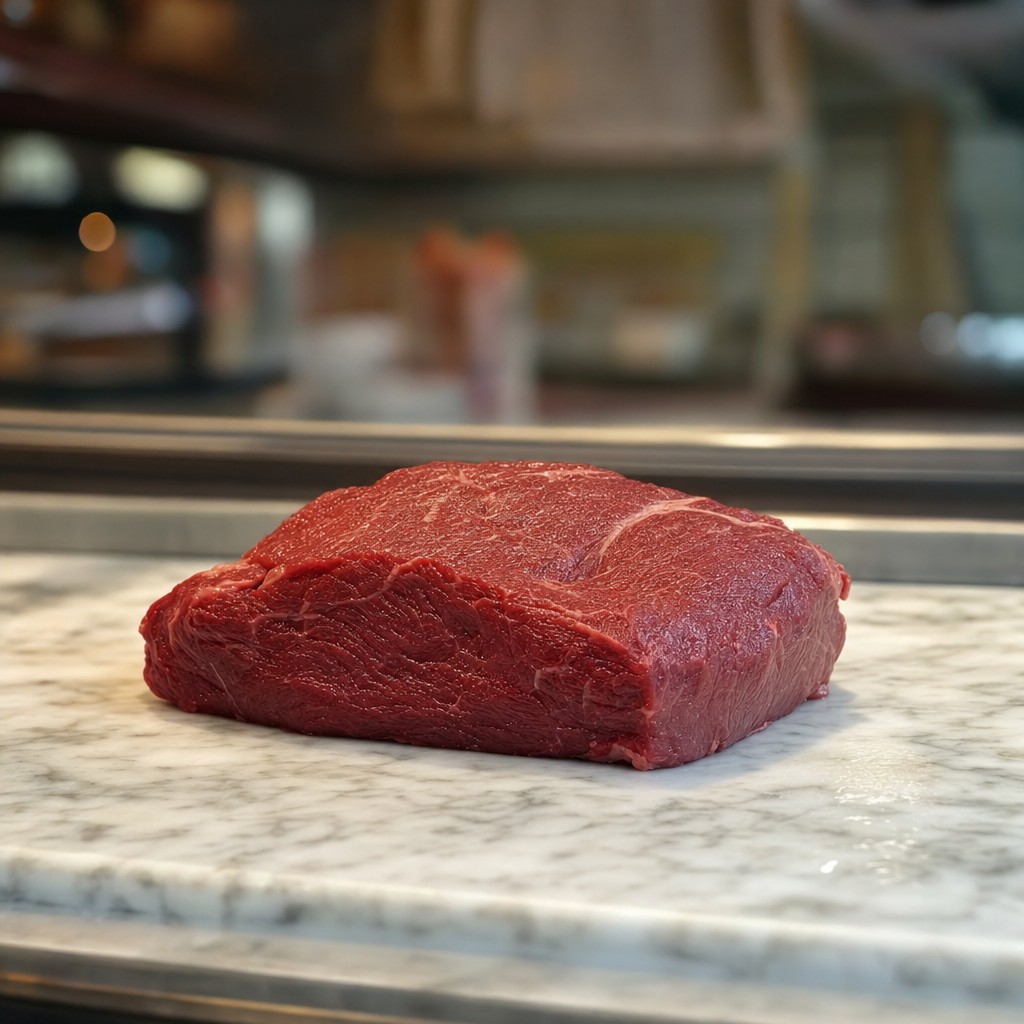
When you buy a beautiful cut of beef or lamb at Boucherie Léopold I in Jette, its bright red color delights the eye. A few hours later, when you open your refrigerator, you notice the shade has darkened or turned brownish. Rest assured: this is a natural chemical process called oxidation that affects myoglobin, the protein responsible for the red color. This transformation does not indicate a loss of freshness or a quality problem, but simply prolonged contact with air. Your meat remains excellent for cooking.
Myoglobin, responsible for the red color
The bright red color of freshly cut meat comes from a protein called myoglobin, present in the animal's muscles. This molecule binds oxygen and appears at its most brilliant just after cutting, when it is exposed to air. This is the shade that catches your eye at the butcher's counter and reassures you about the product's freshness.
This brilliant color lasts only a few hours. Indeed, myoglobin immediately begins its chemical interaction with the surrounding oxygen, initiating an oxidation process that gradually modifies its structure and changes the appearance of the meat.
Oxidation: a natural and harmless phenomenon
When you bring your meat home and store it in the refrigerator, even under food film, myoglobin continues to absorb oxygen from the air and packaging. This progressive oxidation transforms myoglobin into metmyoglobin, an oxidized form that displays a brownish or dark brown tint.
This color change is:
• Natural and scientifically explained by protein chemistry • Safe for health, since no bacteria or toxins are involved • Completely normal even for perfectly fresh meat • Entirely independent of the actual quality or preservation of the product
The meat retains all its nutrients, flavor and texture. Only the appearance changes temporarily.
How to distinguish fresh meat from spoiled meat
Although the color change is natural, certain objective signs allow you to verify the actual freshness of your purchase.
Fresh meat displays:
• A neutral or slightly metallic smell when opening • A moist surface but not slimy • A firm texture that returns to shape when pressed lightly • No sour, acidic or foul odor
Degraded meat shows:
• A strong and unpleasant, sour or putrid smell • A viscous or sticky surface to the touch • A soft texture that does not return to shape • Sometimes gray or greenish spots spread across it (to be distinguished from natural cut marks)
If you observe these signs of deterioration, it is prudent not to consume the meat. However, a simple brown or dull tint, without these symptoms, does not indicate deterioration in any way.
Speeding up or slowing down oxidation
You can influence the speed at which color changes by adapting storage and packaging.
To slow down oxidation:
• Keep your meat at the coldest temperature of the refrigerator (between 0 and 2 °C) • Limit air exposure by keeping it under food film or in an airtight container • Ask your butcher to vacuum-seal the meat if you plan to keep it for several days • Consume the cut within two or three days of purchase to enjoy a more vibrant color
For freezing, which completely stops this process:
• Wrap the meat hermetically in the freezer to prevent freezer burn • Myoglobin remains stable at very low temperatures and the meat will retain its red tint longer once thawed
Why this explanation reassures customers
Understanding that the color change is chemical and not bacterial allows you to shop with confidence at Boucherie Léopold I. Our butchers select fresh, quality meats, handled with care. If the tint evolves at home, it is the natural course of things and not a failure of our craftsmanship or your reasonable preservation.
Most experienced cooks know that this brown tint affects neither taste nor texture. A ribeye that has turned brown remains just as flavorful as at the time of purchase, and a lamb shoulder that has darkened will yield an equally rich sauce.
Frequently asked questions
Can I cook meat that has turned brown after two days in the fridge?
Yes, absolutely, provided the meat does not give off an unpleasant smell and its texture remains firm. The color change is only surface oxidation unrelated to actual freshness. This meat will cook just as well as meat that is still red.
How can I ask the butcher to slow down my meat's oxidation?
If you are buying for consumption in several days, ask your butcher to offer you vacuum packaging, which preserves the red color much longer. You can also buy your meat and freeze it immediately to thaw it a few hours before cooking.
Is red meat that browns in its packaging less good?
No. Even if hermetic packaging slows oxidation, the meat may turn slightly brown in the store or at home. This affects neither quality nor flavor. The color simply changes because myoglobin reacts to the oxygen present in the film or packaging space, which is completely normal.